
The sky is blue because sunlight hits the gas around Earth and scatters blue light in every direction. Red and yellow light pass straight through, but blue bounces off the air to reach your eyes. It is a daily light show happening right over your head.
Sunlight looks clear to us, but it actually holds every color of the rainbow mixed together. When those colors travel from space into our air, the tiny gas bits push the blue light around much more than the other colors. That is why you see a bright blue sheet above you on a clear day.
Sunlight Holds Every Color of the Rainbow
You might think light from the sun is pure white or light yellow. Pass that light through a glass prism, and you instantly see red, orange, yellow, green, blue, and violet. Light travels in waves, just like waves in the ocean.
Some light waves are long and lazy. Red light waves can measure around 700 nanometers from top to top. That is tiny, but it is long for a light wave. Blue light waves are short and choppy, measuring only about 400 nanometers. This size difference changes how each color acts when it hits something in its path.
Think of giant ocean waves rolling right over small rocks near the shore. That is like red light. Now think of tiny ripples splashing off those same rocks in all directions. That is how blue light acts when it hits the top of our atmosphere.
How Air Scatters Light Across the Sky
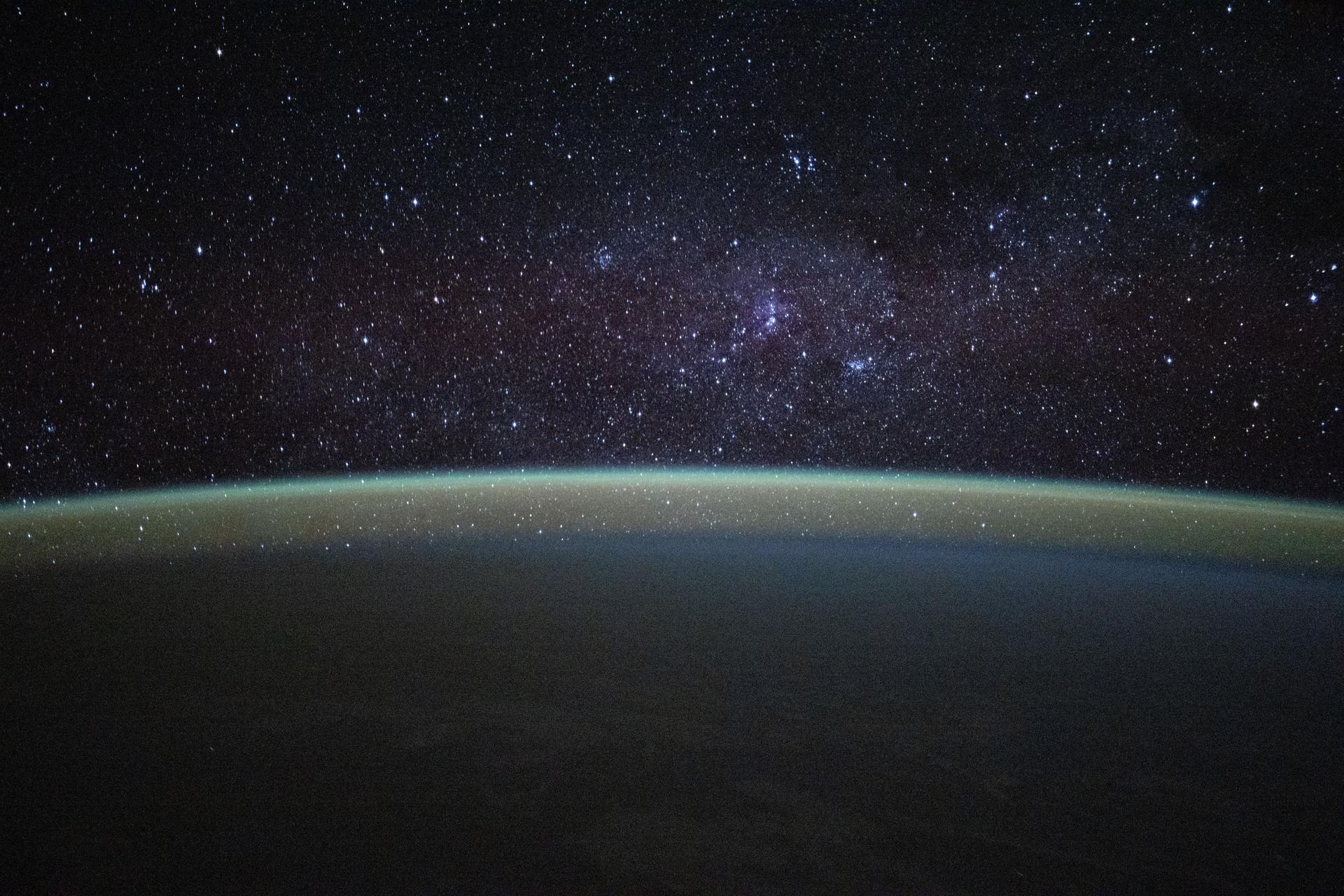
Our planet is wrapped in a thick blanket of air made mostly of nitrogen and oxygen molecules. These gas bits are tiny. They are much smaller than the wavelength of visible light. When sunlight hits these tiny molecules, a special kind of scattering happens.
Lord Rayleigh, a scientist from England, figured out how this works back in 1871. He showed that short waves scatter far more than long waves. Because blue light travels in short, small waves, it crashes into nitrogen and oxygen and bounces all around. We call this Rayleigh scattering.
Red, yellow, and orange light waves have longer shapes. They pass right through the tiny gas molecules without bouncing much at all. They travel straight down to the ground. The scattered blue light bounces from molecule to molecule until it fills the whole sky. When you look up, you are seeing that scattered light entering your eyes from every angle.
You can learn more about how sunlight interacts with our world by reading basic Science guides. It helps us see why the natural world works the way it does.
Why Is the Sky Not Violet Instead?
This is where things get really fun. Violet light has even shorter waves than blue light. It scatters even more than blue light does! So why is the sky not purple?
Two simple reasons solve this puzzle. First, the sun does not send equal amounts of every color to Earth. Sunlight has way more blue in it than violet. The sun simply makes more blue light for us to catch.
Second, your eyes play a huge trick on you. Inside your eyes are tiny light catchers called cones. You have three types of cones that pick up red, green, and blue. Your eyes are much better at picking up blue light than violet light. When both blue and violet hit your eyes at the same time, your brain mixes them together and lands on a bright, clear blue.
Animals see the sky differently. Bees can see ultraviolet light, so their sky looks totally different from ours. Our eyes and brain work together to pick the blue signal out of the air.
Why Sunsets Turn Fire Red and Bright Orange
If blue light scatters so well, why does the sky turn bright red, pink, and orange when the sun sets? The answer comes down to distance.
When the sun sits high above you at noon, its rays travel through a thin layer of air to reach your eyes. It is the shortest path possible. Most of the blue light scatters across the sky, but enough light gets through to make the sun look bright and warm.
At sunset, the sun sits low near the line where the land meets the sky. Sunlight must travel through a much longer path of air to reach your eyes. It passes through almost ten times more air than it does at noon!
By the time that light finishes its long journey, almost all the blue light has been scattered away into space or sideways out of your view. The short waves are gone. Only the long waves can make it through that thick wall of air without getting scattered away. Red, orange, and yellow light ride straight through to your eyes, giving us soft pinks and fiery red sunsets.
Dust particles, smoke from fires, and salt from sea spray make sunsets look even more dramatic. They act like tiny mirrors that catch those long red waves and spread them across the clouds. If a volcano blows dust high into the air, sunsets around the world can look deep red for months!
Clouds Are White and Space Is Pitch Black
You might wonder why clouds do not look blue if they sit right in the middle of all that scattered light. Water drops in clouds are much bigger than gas molecules. They are actually larger than light waves themselves.
When light hits these big water drops, all the colors scatter equally. Red, blue, green, and yellow all bounce off the water drops in the same way. When all colors scatter together equally, they stay white. That is why fluffy rain clouds look white against a blue backdrop.
If you leave Earth completely, the sky changes instantly. Astronauts on the Moon look up and see a pitch-black sky, even when the ground is brightly lit by the sun. The Moon has no air and no atmosphere. Without gas molecules to scatter the light, sunlight travels in straight lines through space. The sky stays dark as midnight everywhere except right where the sun shines.
Understanding light scattering helps scientists track air pollution and keep our planet healthy. You can check fresh scientific updates on our main blog page for simple science stories to learn more about how nature works. It is amazing how much science happens in a simple breath of air.
How Air Quality Changes the Shade of Blue
Have you ever noticed that the sky looks darker blue on some days and pale blue on others? The sky looks crisp and deep blue high up in the mountains. Down in a big city on a hot summer day, the sky often looks milky white or light blue.
This happens because of extra things floating in the air. High mountains have thin air with very little moisture or dirt. With mostly small gas molecules around, Rayleigh scattering works best, leaving a pure deep blue. Near big cities, the air holds water vapor, pollution particles, dust, and pollen.
These larger particles bounce all colors of light around instead of just blue. This extra bounce mixes white light back into the scattered blue, making the sky look washed out or pale. A super clear, deep blue sky is actually a great sign that your air is fresh and dry.
Even human history and technology can be traced through the air we breathe. You can read about how researchers track complex events like the WSJ Exposes Shadowy Services Laundering Binance Hack Funds news to see how facts are uncovered in other fields.
Look Up and Watch the Light Show Today
Next time you step outside, look up at the sky for a moment. You are not just looking at empty space. You are watching a real physics experiment happening miles above your head. Billions of tiny light waves are crashing into nitrogen bits right now, pushing blue light down into your eyes.
Try watching the sky change colors tomorrow as the day goes on. Look at how pale the blue gets near the horizon compared to the deep color straight up. Watch how the colors shift from blue to yellow and red as the sun slides down in the evening. It is the easiest science show on Earth, and it is free every single day.
Comments
Post a Comment